Buying mountain land can feel simple at first. You see a beautiful view, imagine the home you want, and start picturing life in North or South Routt. But in Clark and the surrounding Routt County areas, vacant land needs more homework than many buyers expect. If you are thinking about buying land here, this guide will help you focus on what really matters before you commit. Let’s dive in.
Why land due diligence matters
In unincorporated Routt County, a parcel has to work as a legal building site, not just look appealing on paper. Routt County’s Unified Development Code regulates land use, development, and subdivision, and every parcel falls within a specific zone district with its own standards.
That can affect permitted uses, setbacks, lot area, frontage, height limits, waterbody setbacks, floodplain standards, and skyline height limits. On top of that, subdivision covenants may add restrictions that the county does not enforce, so you need to review both county rules and private restrictions.
For most buyers, the key question is not just whether you like the property. It is whether the parcel is actually buildable for the cabin, ranchette, or future home site you have in mind.
Start with zoning and buildability
A parcel may seem large enough for your plans, but zoning and subdivision history can still limit what you can do. In Routt County, buildability depends on district standards and, in some cases, whether a parcel qualifies under older subdivision or zoning rules.
This is one of the first areas where local guidance matters. Before you negotiate too far, you should confirm the zone district, setbacks, overlays, and any subdivision-specific restrictions tied to the lot.
What buildable can mean in Routt County
If you will need an onsite wastewater treatment system, Routt County says no excavation can begin without an OWTS permit. In general, the parcel must be at least 5 acres, or it must have been platted before the 1972 zoning regulations unless a zoning exemption applies.
The county also requires a Colorado-licensed registered professional engineer to perform the site and soil evaluation and design the system. Once the county receives a complete OWTS application, review is targeted at about 14 working days, and the permit is valid for one year.
Building permits involve multiple reviews
When you are buying land, it helps to understand that the building process is not just one simple application. Routt County’s Regional Building Department uses electronic submittals through CityView, and the review process can involve planning, building, public works, environmental health, rural fire, GIS, and utility providers.
The county also says every buildable lot and every residential or commercial unit must have an address number before a building permit is issued. If a road serves two or more buildable lots, it must also have a unique road name, which matters for emergency response, deliveries, and rural mail service.
Access can make or break a land purchase
In North and South Routt, access is one of the biggest issues to verify early. A parcel can look perfect in a listing, but if legal or practical access is unresolved, your plans can get expensive fast.
Routt County says a Road & Bridge driveway or access permit is required for a driveway that connects to a county road or a privately maintained road in public right-of-way. If the property accesses a state highway, you will need a CDOT access permit instead.
Driveway rules are not minor details
If the driveway is longer than 100 feet, the county says fire department approval is required. If the access is on a private road with no public right-of-way, the county does not issue the permit, so you will need to identify the governing entity.
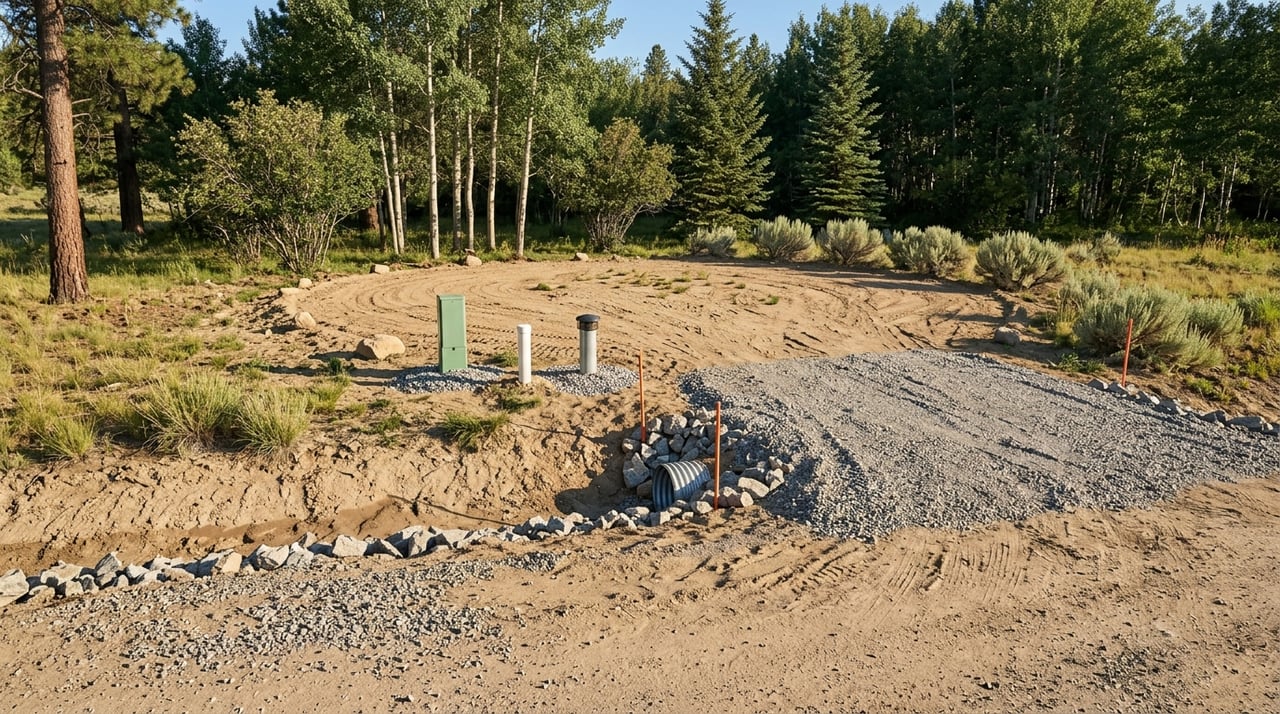
County driveway standards also address drainage, culverts, and sight distance. The county notes that private driveway construction and maintenance are the owner’s responsibility, and work in county or public right-of-way is only permitted between May 1 and November 1.
Winter access deserves special attention
Year-round use is not automatic in rural mountain areas. Routt County maintains about 160 miles of paved roads and 500 miles of gravel roads, but it does not maintain private roads.
The county also notes that some roads receive minimal or no winter maintenance and some are closed in winter. Certain routes are classified as Remote/Limited or Backcountry, which means they are not plowed in winter and may only be seasonally accessible.
If you are planning a full-time residence, winter construction, or regular access for a second home, this matters. It can also affect how practical a parcel looks to lenders and insurers.
Water, wells, and septic need early review
Water is a separate due-diligence issue in Colorado, and it should never be treated as an afterthought. The Colorado Division of Water Resources says every new well in the state that diverts groundwater must have a well permit.
The well permit file can show allowable uses and available construction records, and complete review of a new or replacement well permit can take up to 49 days. That timeline alone is a good reason to start your research early.
Land ownership is not the same as water rights
This is a point many buyers do not realize at first. If a ditch crosses a property, that does not necessarily mean you have the right to use that water.
Colorado State University Extension notes that many rural wells are household-use-only, which can limit outside watering, gardens, or livestock uses. It also notes that ditch companies may have access rights for maintenance, and water rights can be sold or inherited separately from the land itself.
Check existing wells carefully
If the property already has a well, you still need to verify the details. CDPHE says private well owners are primarily responsible for water quality, since private wells are not regulated under the Safe Drinking Water Act.
That means buyers should check permit status, allowable uses, water quality, and any available maintenance history before closing. A well on site is helpful, but it is not enough to assume it fits your intended use.
Utilities and services are parcel-specific
Utility questions can change your budget quickly, especially on raw land. In Routt County, utility installation in county right-of-way requires a permit, and the county notes that utilities are typically bored rather than open-cut.
During the building review process, utility providers may review electrical routes, meter locations, and service plans. The county also notes that public water and sewer districts review utility plans and collect fees before a building permit is issued when those services apply.
If you are comparing multiple parcels, utility extension costs can be one of the biggest hidden differences between them. Two lots with similar acreage and views can have very different development paths.
Floodplain and drainage still matter in rural areas
Buyers sometimes focus on slopes, trees, and views and forget to ask about drainage. But floodplain conditions can affect rural parcels too, especially near rivers, creeks, drainage swales, or low crossings.
Routt County participates in the National Flood Insurance Program and notes that flood insurance can be purchased even outside a high-risk flood area. The county encourages buyers to check flood maps or contact Planning, which is a smart step before removing contingencies.
A smart land-buying checklist
The best land buyers in Clark and across North and South Routt stay methodical. Before you get too attached to a parcel, make sure you have answers to the basics.
Here is a practical checklist based on Routt County guidance:
- Pull the recorded deed, plats, easements, and any covenants through the Clerk & Recorder records search.
- Confirm the parcel’s zone district, setbacks, overlays, and subdivision restrictions.
- Verify who maintains the access road and whether it is county-plowed, seasonally closed, or minimally maintained in winter.
- Check whether the property needs a county driveway permit, CDOT access permit, or fire-district sign-off.
- Review septic feasibility early, including the 5-acre rule, any grandfathered exemption, soil evaluation, and engineer-designed OWTS requirements.
- Verify whether the property has an existing well permit, usable water right, or only limited household-use water.
- Ask utility providers about extension costs, meter requirements, and any district fees.
- Check flood maps and insurance options before removing contingencies.
Why local guidance helps
Buying vacant land in Routt County often involves more moving parts than buying an existing home. You may be balancing zoning, access permits, winter road realities, well permits, septic design, utility coordination, and future building timelines all at once.
That is why a local, detail-oriented approach matters. When you have someone helping you look past the view and into the practical path to ownership, you can make a much more confident decision.
Whether you are searching for a future homesite, a second-home parcel, or a long-term investment in North or South Routt, the goal is the same. You want land that fits your vision and gives you a realistic path forward.
If you are considering land in Clark or anywhere in Routt County, Ashley Walcher can help you evaluate the details, coordinate the right questions early, and move forward with clarity.
FAQs
What should you check before buying land in North or South Routt?
- You should review zoning, subdivision restrictions, legal access, road maintenance, septic feasibility, well permit status, utility availability, and floodplain conditions before moving forward.
How does zoning affect vacant land in Routt County?
- Zoning can affect permitted uses, setbacks, lot standards, height limits, and other development rules, so a parcel’s size alone does not confirm that it will work for your plans.
Do you need a permit for a driveway on Routt County land?
- Yes, a driveway or access permit is generally required for access to a county road or a privately maintained road in public right-of-way, and some properties may need CDOT or fire-district approval as well.
What should you know about wells when buying land in Clark, Colorado?
- You should confirm whether there is a well permit, what uses are allowed, whether water quality has been tested, and whether the well supports the way you plan to use the property.
Can winter road access affect a land purchase in Routt County?
- Yes, some roads are not plowed in winter or may be seasonally inaccessible, which can affect year-round use, construction timing, and overall practicality for the property.